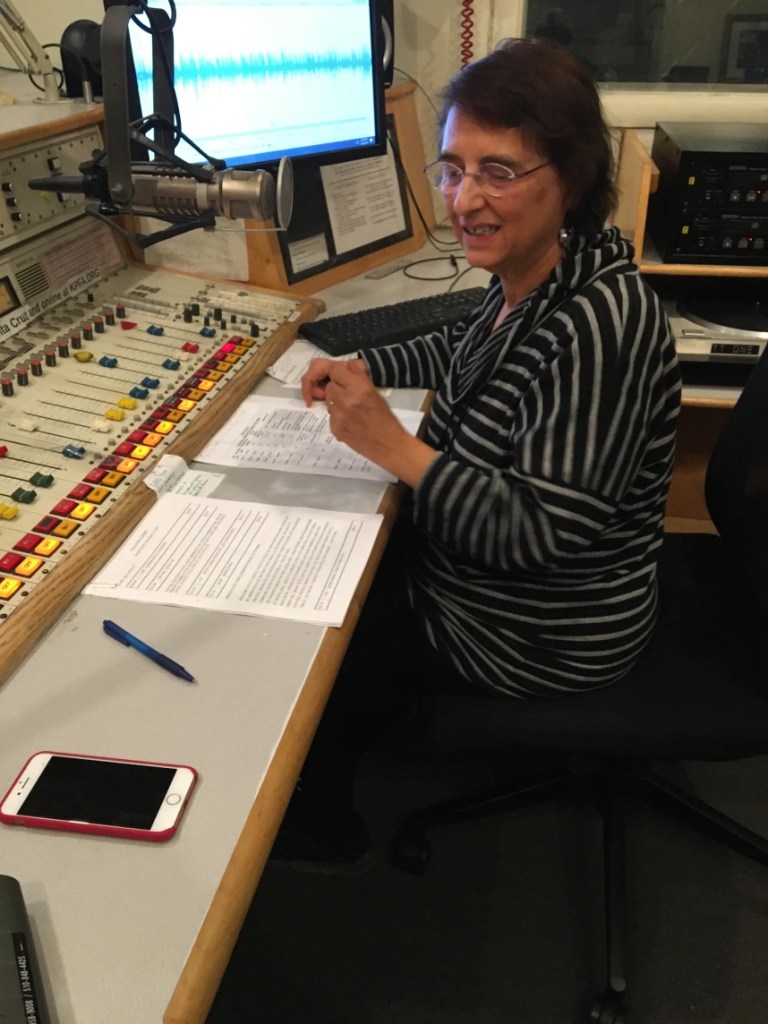
I’m Chana Wilson, a radio/audio producer. I began in radio way back in the days of magnetic reel to reel tape that I edited with razor blades, doing shows at KPFA-FM in Berkeley, CA from 1973-1983. Through interviewing all kinds of guests, I discovered I loved hearing people’s stories. I left radio to explore people’s lives in more depth in my work as a psychotherapist. I’m also a writer; in 2012, my memoir, Riding Fury Home, was published by Seal Press. Now, since retiring, I’ve returned to audio storytelling.
On this site, you’ll hear stories of political activism, music and culture, history and memoir. Enjoy!
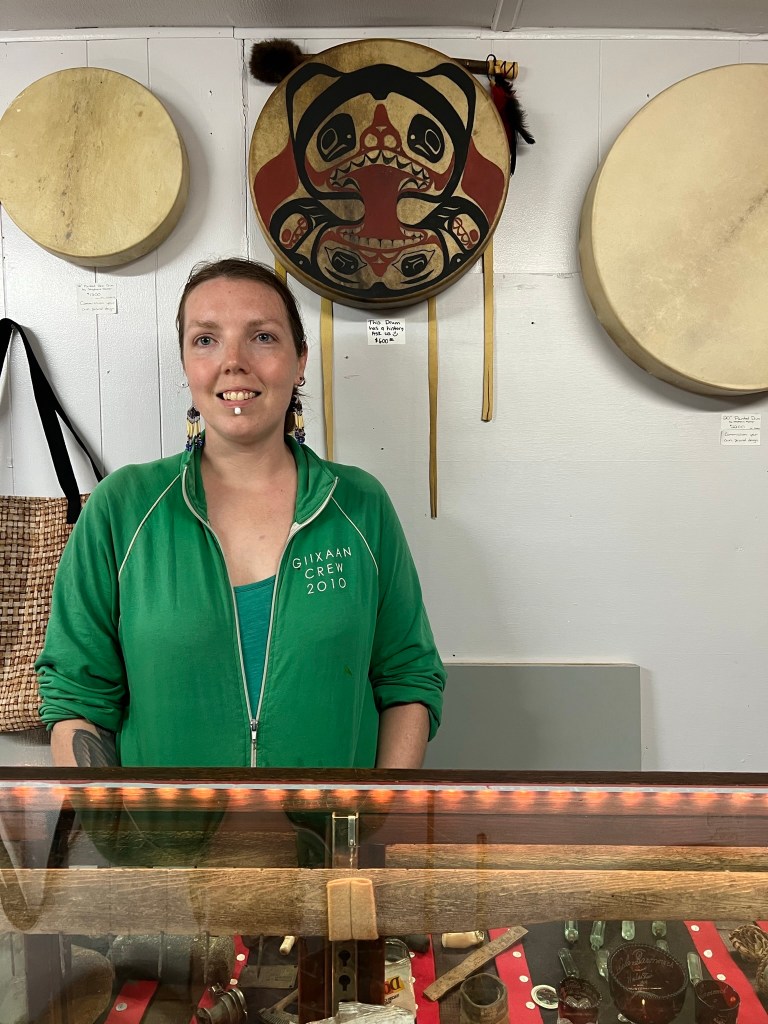
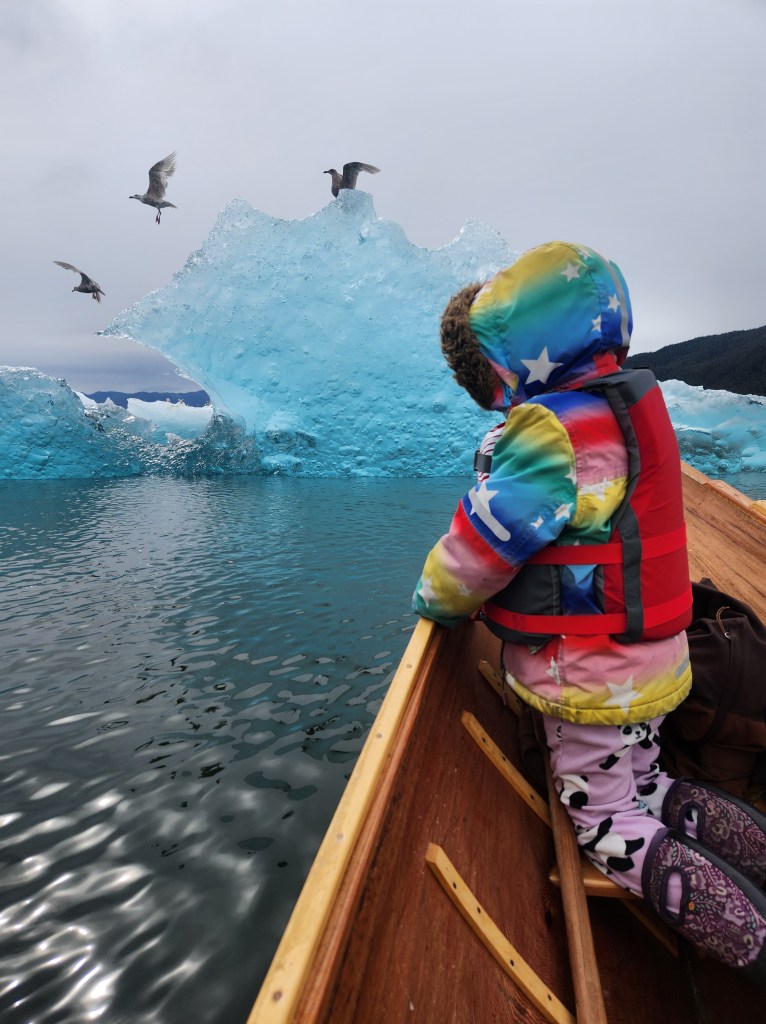
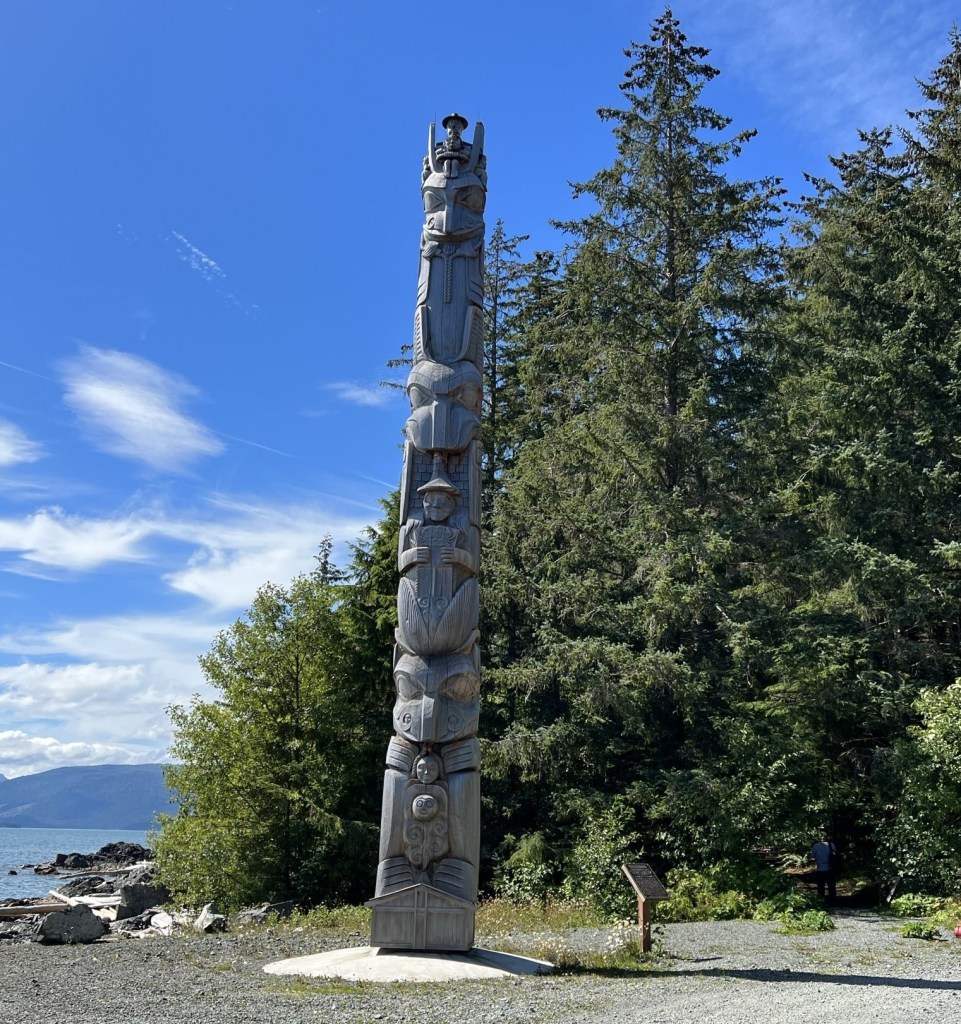
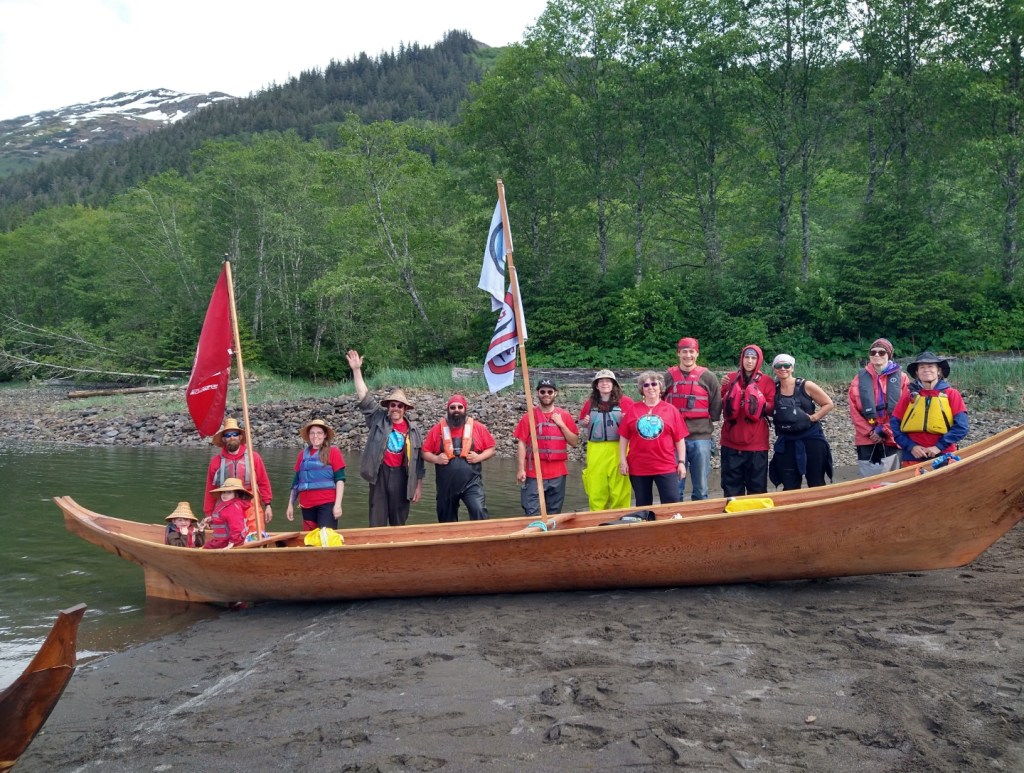
There is healing and joy in reclaiming almost lost cultural traditions. On a visit to Alaska, I was honored to meet the Hamar family. They are two generations of an Alaska Native family who are reviving their Haida Nations cultural practices. Members of the family are carving oceangoing canoes, totem poles, and masks, weaving ceremonial regalia, practicing traditional harvesting of foods, curating a family museum of artifacts, and taking part in language revitalization.
Have a listen to their entrancing stories.
Top photo: Haida oceangoing red cedar dugout canoes. Photo courtesy Bonnie Hamar. Center left: Stephanie Hamar in the family museum. Middle: Bow captain at watch in the canoe. Photo courtesy Stephanie Hamar. Right: Kasaan, Alaska totem pole. Lead carvers: Stormy Hamar and Harley Bell-Holter. Apprentice carvers: Eric Hamar, Rebecca Sheufelt, Justin Hendrix and Andrew Kashevarof.Canoe crew ready to travel. Photo courtesy Bonnie Hamar.
Stories bring us close to lived experience. Amidst all the coverage of the politics of abortion, we rarely hear personal stories directly. In the aftermath of the Supreme Court ruling that stripped Americans of the constitutional right to abortion, KPFA radio producer Kendall Crakow reached out to folks to gather their abortion stories. I joined her to co-produce stories from these three women.
You will hear: A woman, despite using an IUD, finds herself pregnant and in need of an abortion 13 years after her first abortion, and struggles to find treatment in an ultra-conservative, anti-abortion state. A rabbi tells two abortion stories: the septic abortion and death of her great-great grandmother in the 1880s, and her own abortion in pre-Roe America. While in high school, a teenager in the midst of coming into her identity as a lesbian discovers she is pregnant.
Professor Monica McLemore, PhD, MPH, and RN, is a preeminent scholar of anti-racist birth equity research. In this half-hour conversation that I produced for International Women’s Day 2023, Professor McLemore shares an overview of the Reproductive Justice framework. She elaborates on why maternal mortality has doubled in the U.S over the last 35 years. She talks about the many factors that lead Black women to be 3 to 4 times more likely than white women to have life-threatening pregnancy-related conditions, and how for Black women even wealth doesn’t help. She describes her vision, rooted in Reproductive Justice, of what political, medical, and social changes are needed for reproductive health in America.
“Limbo Rock,” is a story of a queer pre-teen in the 1960s (that would be me.) At school dances in 6th, 7th and 8th grade, I quickly learn not to ask girls to dance, but I don’t yet understand my own sexuality in that era of profound homophobia. Thank goodness the Women’s and Gay Liberation Movements of the 1970s are only a decade away, and those movements will be lifesaving for me. . . but that’s another story.
Lots of 60s dance music in this 14 minutes: The Twist, The Limbo, The Swim, The Jerk…enjoy!
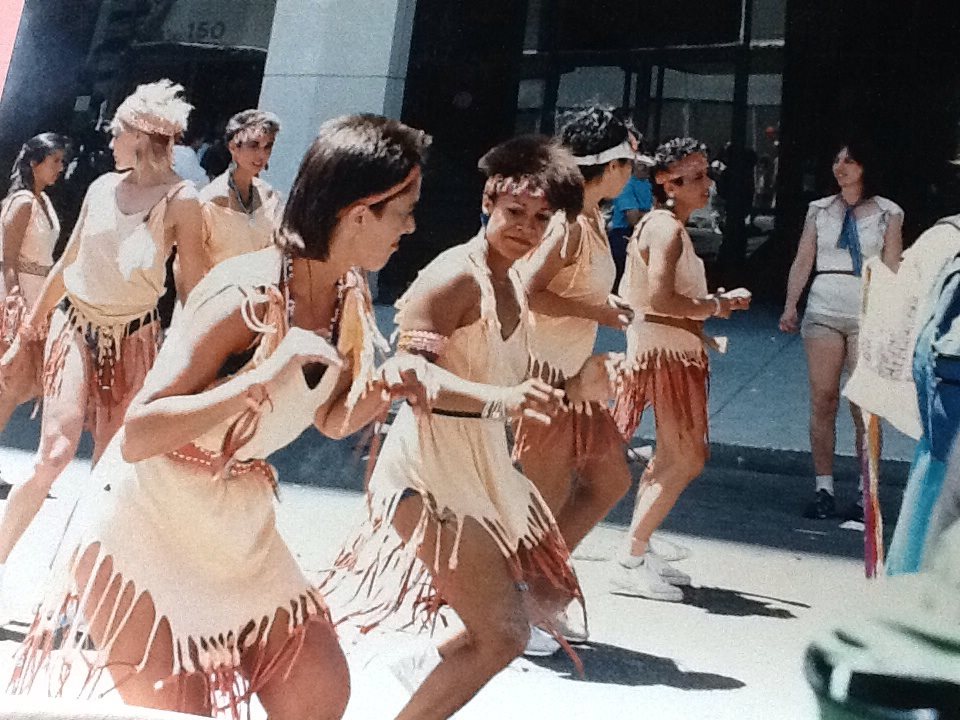
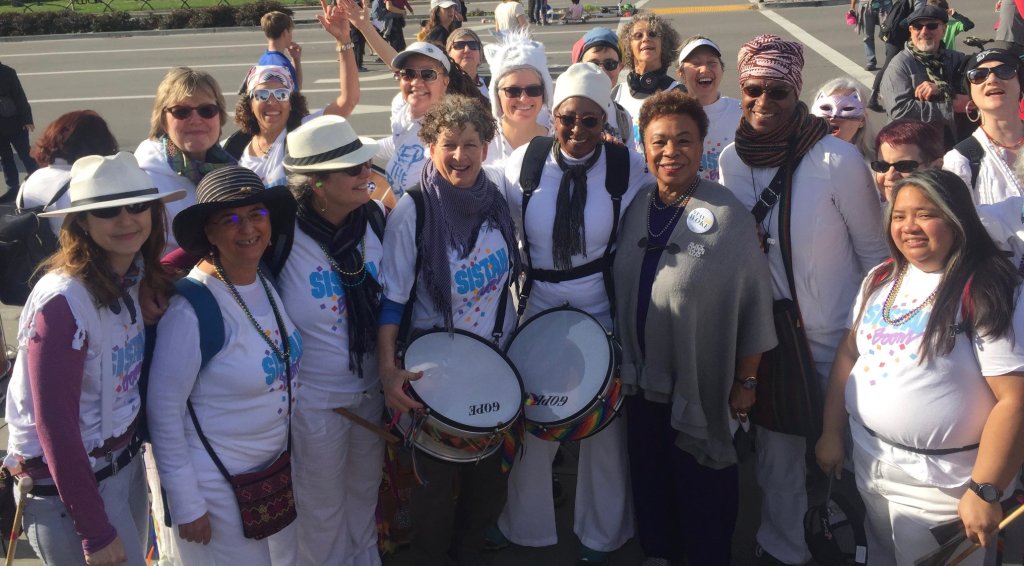
Sistah Boom is a women’s samba marching band that has been showing up in the streets at Bay Area demonstrations for 40 years – bringing power, energy, and spirit. Founded by master drummer Carolyn Brandy in 1981, the story of Sistah Boom is one of women’s empowerment, queer liberation, and marching for social justice. It’s also a story of women breaking taboos and finding collective joy.
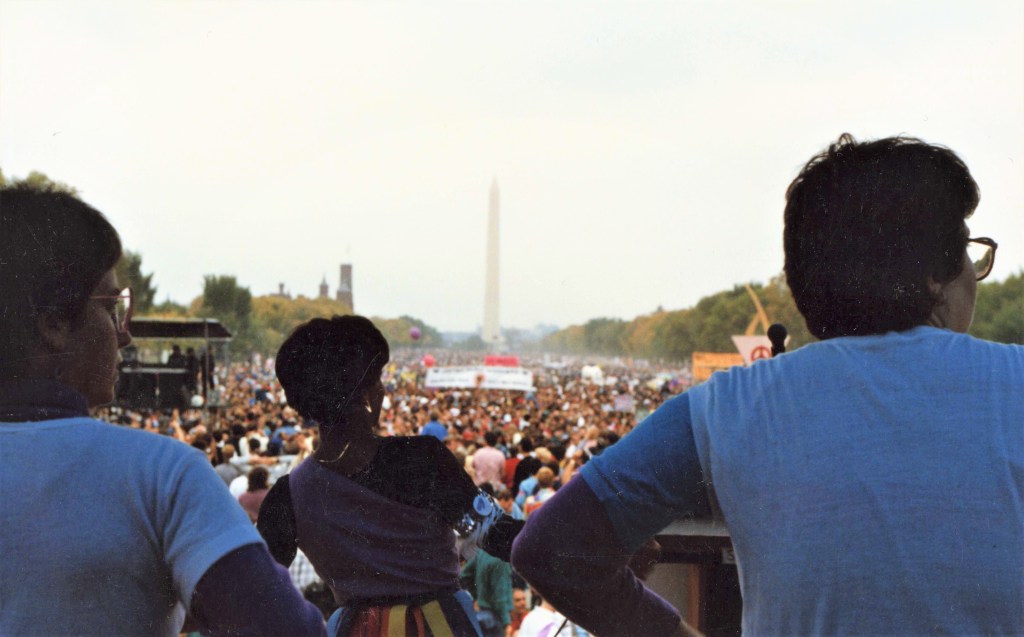
This sound-rich documentary chronicles not just the band, but the four decades of social movements the band took part in: the Pride Marches, the Gay Olympic Games, the 1987 March on Washington for Lesbian and Gay Rights, AIDS activism and the Names Project Quilt, the Occupy Movement, the Women’s Marches, same-sex marriage celebrations, and demonstrations against ICE incarceration. One section covers the internal work the band did participating in Unlearning Racism training, still so relevant today.
I joined the band in 1984. It’s still going strong today!
Sistah Boom dancers, 1980sAt Oakland Women’s March with Rep Barbara LeeDemonstration at ICE detention centerOnstage, 1987 March on Washington for Lesbian and Gay RightsOakland Women’s March 2017
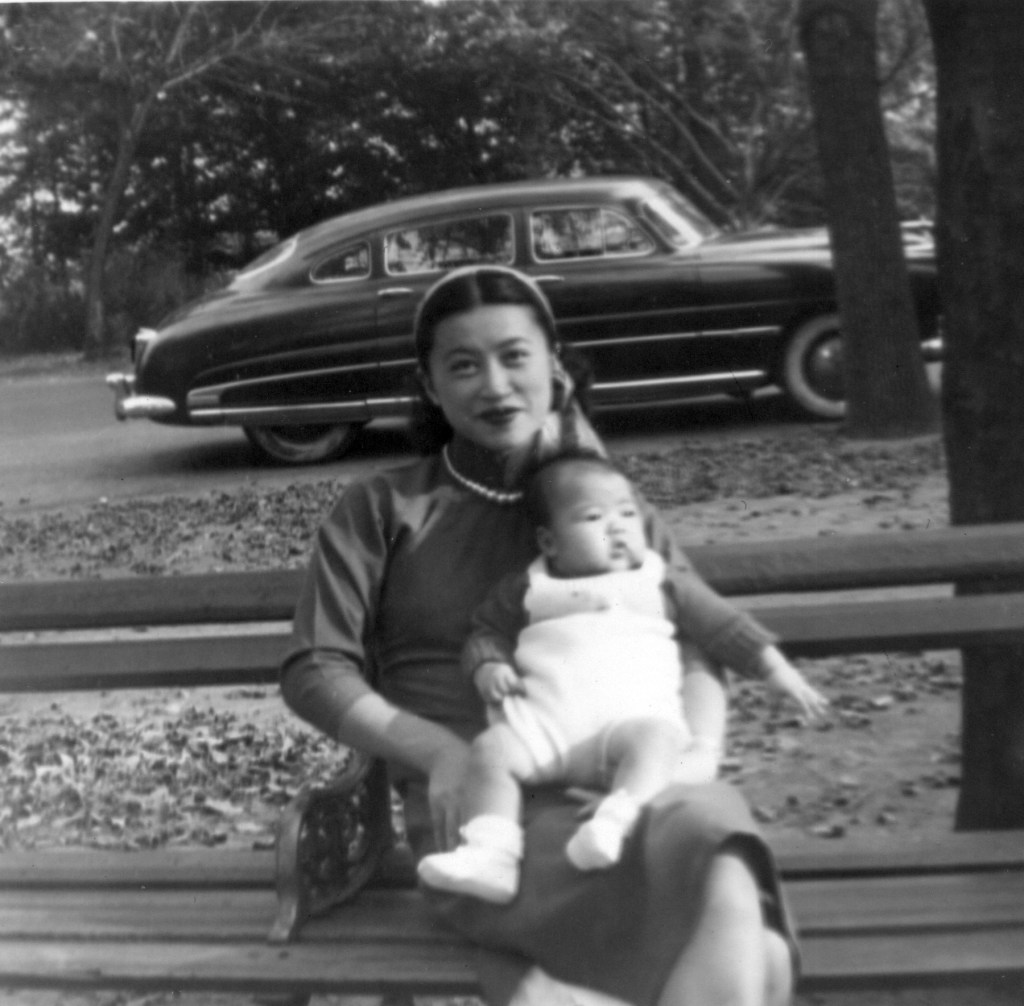
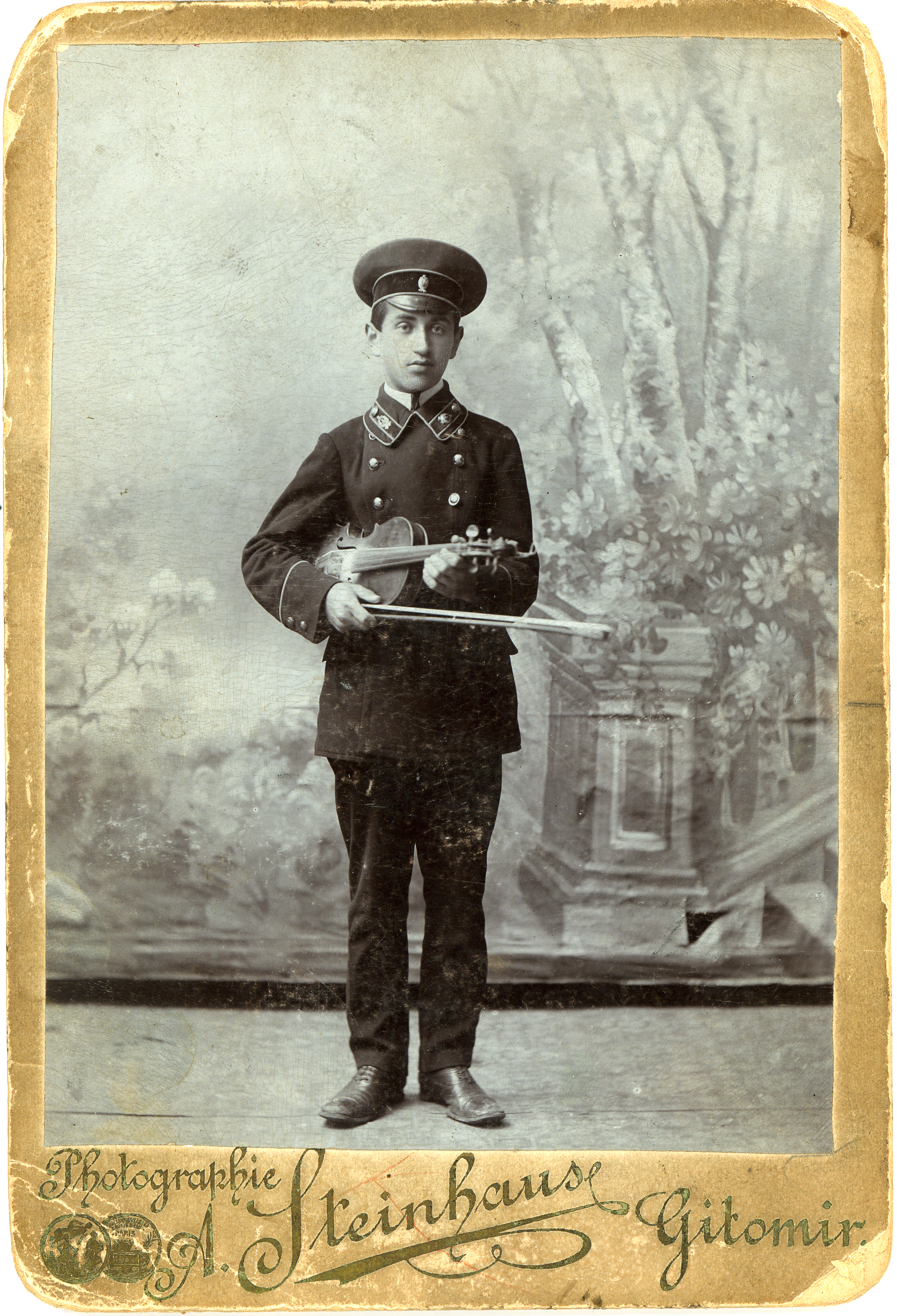
This is the stories of two women refugees, one who fled Shanghai during Mao’s Chinese revolution, and the other, my grandmother, who escaped the Bolshevik Revolution and Ukrainian pogroms. Both had secrets they held onto for years until, in an extraordinary turn of events, one opened up to her daughter, and the other to me, her granddaughter. These stories explore the question: when immigrants flee trauma and loss, what stories get told and passed on in families, and what remains unspoken, kept hidden in silence? What healing can happen in families when the past is finally revealed?
I interviewed Helen Zia about her mother’s story for this program. I recorded my grandma Katie in 1976 on a home cassette recorder. I was 25 at the time and she was in her early 70s. Thank goodness the cassette survived to be digitized. You will hear my young, higher pitched voice with a heavier New Jersey accent. Enjoy!
Left: Helen Zia as a baby. Used with permission, courtesy Helen Zia. Center: My paternal grandpa Isaac with his violin. Right: Katie and Isaac Wilson, my grandparents, outside their Kosher dairy restaurant in Atlantic City, New Jersey.
Helen Zia is a Chinese-American journalist and activist for Asian American and LGBTQ rights. She is the former Executive Editor of Ms. Magazine, and author of several books, including Asian American Dreams: The Emergence of an American People. As a Fulbright scholar, Helen interviewed over 100 Chinese emigres who were among the great exodus fleeing Shanghai in 1949. Her research led to the book Last Boat Out of Shanghai: The Epic Story of the Chinese Who Fled Mao’s Revolution. Her mother is one of four main characters in that book.




 Chana Wilson